
Beyond the Quran Class: Building a Full Islamic Studies Habit
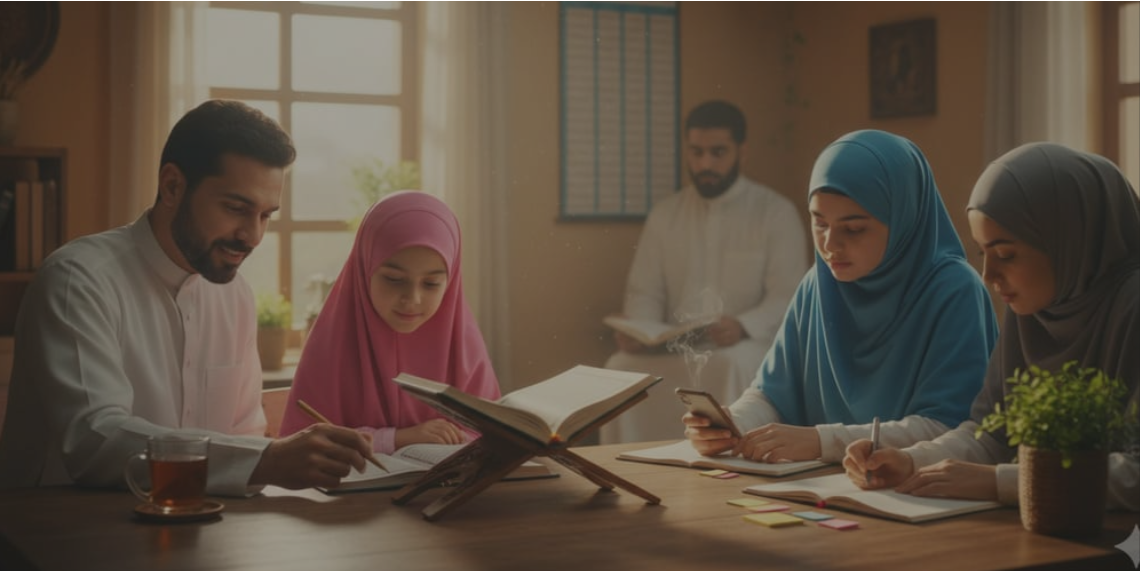

Most families start their religious education journey with a single class, usually a weekly Quran session, and treat that as the whole plan. It’s a reasonable starting point, but a lot of students eventually notice that recitation alone doesn’t answer the questions that come up later, about history, about daily practice, about the reasoning behind rulings they’re expected to follow.
That gap doesn’t announce itself early on. A student can recite beautifully for years while still having only a surface-level understanding of the broader tradition they’re part of. It usually takes a specific moment, a question from a curious child, a conversation that exposes a gap, before a family realizes the curriculum needs to grow beyond a single weekly recitation class.
Building Real Islamic Knowledge, Not Just Recitation
A structured Islamic studies course fills in exactly this kind of gap, covering history, basic jurisprudence, and the reasoning behind everyday practices in a way that a purely recitation-focused class was never designed to do. Students who add this kind of study alongside their Quran lessons tend to develop a more complete, connected understanding rather than a set of memorized verses with no surrounding context.
Format matters a lot here. Dense, lecture-heavy material aimed at advanced students rarely works for someone just starting to build this kind of knowledge, whether they’re a curious teenager or an adult who never had the chance to study formally earlier in life. A well-designed course breaks material into manageable pieces, building gradually rather than assuming a level of background the student doesn’t yet have.
Making Learning a Habit, Not a One-Time Project
Beyond a single course, treating Islamic education as something to keep returning to, rather than a box checked once and set aside, tends to produce far better long-term results. Using a genuine Islamic learning platform that offers ongoing content, not just a fixed curriculum with a defined end point, gives students a place to keep learning years after their initial classes wrap up.
This matters especially for adults, who often finish a structured course and then have no clear next step. A platform designed for continued learning, with new material added regularly and content organized by topic and level, solves that problem by giving students somewhere to keep going rather than leaving them to search for scattered resources on their own.
Choosing a School to Grow With Over Time
Consistency of provider ends up mattering more than people expect once a family is juggling several subjects across different ages and levels. Sticking with one established school, like Super Muslim Academy, across recitation, Islamic studies, and whatever else a family adds over time cuts down on the coordination headache of managing several unrelated platforms, each with its own login, schedule, and billing system.
It’s worth asking directly how a school structures its broader curriculum before committing, since some platforms genuinely integrate Quran study with Islamic studies and history, coordinating what’s taught across subjects, while others simply offer several unrelated courses under one brand without much connection between them.
Questions Worth Asking Before You Commit
Before enrolling in a broader Islamic studies program, it helps to ask directly how content is organized by level, since material aimed at complete beginners looks very different from content written for someone with years of prior study. A platform that clearly labels difficulty and suggests a logical starting point tends to serve new students better than one that presents everything as a single undifferentiated library.
It’s also worth asking how a school supports students working through material independently between live sessions, if that’s part of the format. Some platforms pair recorded or written content with regular teacher check-ins to answer questions, while others expect students to work through material entirely on their own, and knowing which model you’re signing up for helps set realistic expectations from the start.
Finally, ask how a school handles a student’s changing interests over time. A teenager who starts with basic history might later want to go deeper into a specific topic, and a school able to adjust and expand a student’s path as their curiosity develops tends to keep that student engaged far longer than one offering only a single fixed track with no room to branch out.
Starting Small and Building From There
None of this needs to be tackled all at once. Most families find success adding one new subject at a time, giving a student, whether a child or an adult, time to settle into a new habit before introducing another. A recitation class that’s been running steadily for months is a much better foundation for adding Islamic studies than trying to launch several new subjects simultaneously and hoping everything sticks.
What tends to separate families who build a genuinely well-rounded Islamic education from those who stall out after the first class isn’t ambition or even available time. It’s finding a school flexible enough to grow alongside a student’s changing needs, from a first recitation lesson through years of deepening study, without needing to start the search over every time a new subject becomes relevant.
تعليقات